Search This Blog

Sunday, July 11, 2010

Merida Day 3 Celestun Beach-July 4

On our trip to Celstun July 4th we were suppose to get to see a flock of flamingos. Unfortunately, the tide was high and they were nowhere to be seen. However, we did get to take a boat ride and see the coastline, which was breathtaking. We also stopped and visited a wetland area and saw mangrove trees. The area we visited had several trees that had been killed by a past storm and had become mummified by the salt water.
After the boat ride we had a nice seafood lunch at a local restaurant. I had my first ever crab tacos. Yum


Merida Day 2 Lunch with the American Counsel-July 3

After the school we were off to have lunch with the US Counsel Gregory Segas at the Hacienda Teya. It was a beautiful restaurant and listening to Mr. Segas explain Mexican politics was fascinating. The hacienda had been built by a Sisal Barron.

This is the original Hacienda.
The family later built this new house in the French Colonial Style. It has a full size swimming pool in the entrance on the first floor.
I found another reproduction of this ancient indian head while walking around the gardens at the Hacienda. We will be seeing the original head later on in our trip.

Merida Day 2/Escuela Secundaria Tecnica 58- July 3

On Saturday we had the opportunity to meet with some secondary English teachers. It was an interesting visit. In many ways they are facing the same challenges that American teachers face. Things like children in poverty and how to best meet their needs, inclusive education and students not wanting to complete homework. These teachers however face challenges we would never dream of. The only thing the Mexican government guarantees is the teachers‘ salaries. The teachers are left we next to no supplies for the students of any kind. The school day is split in two. There is a morning session and an afternoon session. Many of the teachers work both so they are at school by 7am and don’t leave until around 8pm. I enjoyed visiting with them very much.

Typical teachers desk. It is set up on a platform.
Typical secondary classroom.

Merida Day 1 7/2

Merida is the capitol city of Yucatan. It is another beautiful example of Spanish colonial architecture. In the past there were several very wealthy families that lived in Merida. The money had come for the Sisal Industry. Several of the mansions where built in the classical French style. The one I liked most was built by two brothers who wanted their houses to look just like the Palace of Versailles in France. The houses were constructed right next to each other and both had a very grand French presence. Sadly I was never able to get any pictures because every time I was gong by the houses it was night.

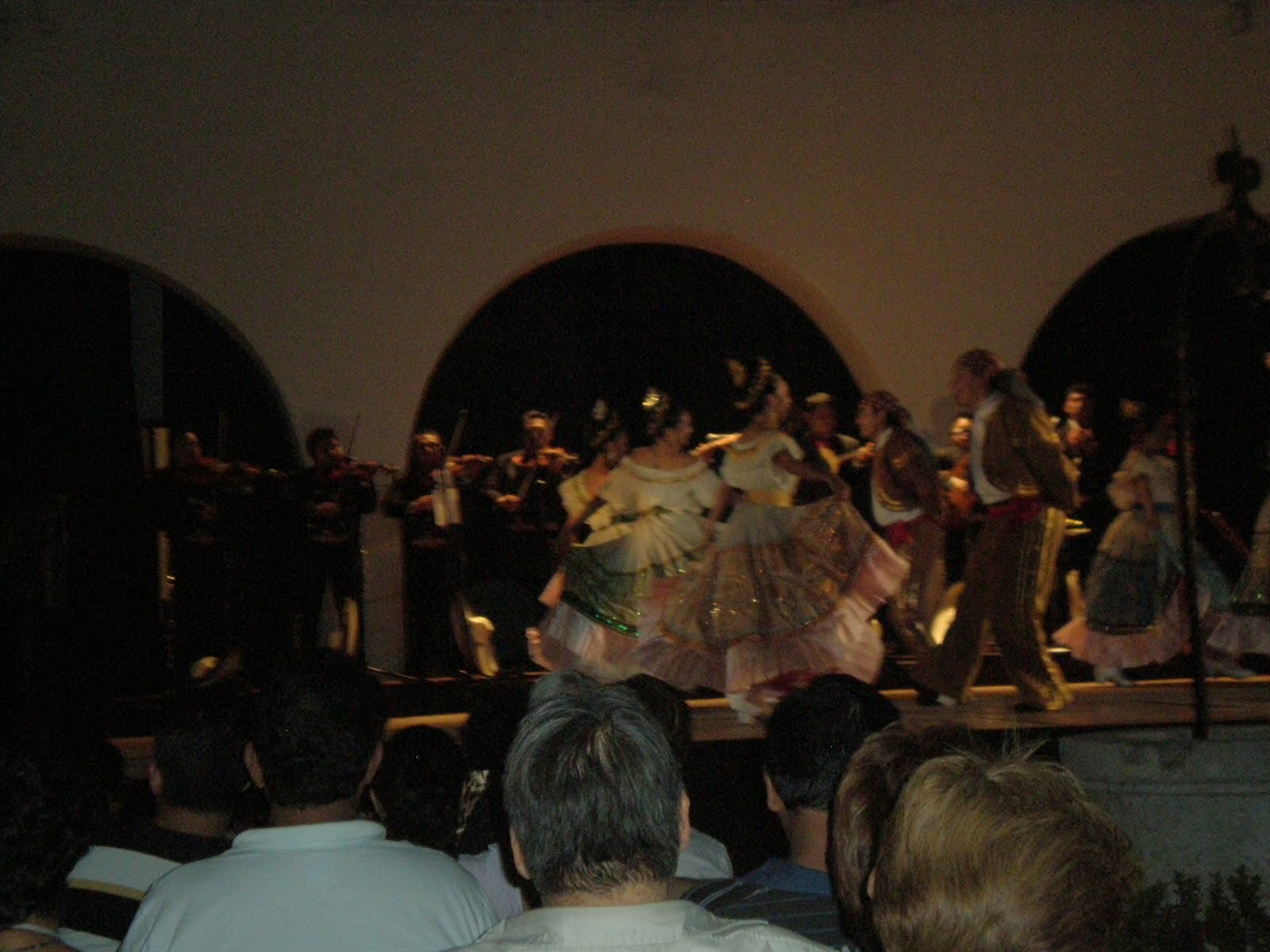
We had the opportunity on Friday evening to go to one of the Universities and watch a ballet folklorico. On the way to the performance Jacquas (our wonderful guide) introduced us to some marvelous ice cream shop. I tried the coco (coconut) one evening and Mango the next it was delicious!

Saturday, July 10, 2010

Izamal 7/2

Izamal is a small Spanish Colonial town. In the early 1990’s the Pope came and visited this town to ask for forgiveness for the past transgressions of the Catholic Church here in Mexico. In preparation for that visit the whole town was painted ocher yellow. It is now known as the yellow town. While we where there we were treated to an impromptu concert at the convent put on by a visiting group of Spanish youth.

This is the restaurant where we ate lunch.
Statue of Pope John Paul who visited Izamal and ask forgiveness for the churches past transgressions to the native Mexican people.
You can take a horse and buggy ride around the town.
The group of Spanish youth that are traveling trough Mexico. They put on a concert in the plaza of the church.
The hill in the background of this photo is an ancient Mayan Pyramid that was to big for the Spanish to totally destroy.

Chichen Itza 7/2

Chichen Itza is one of the largest Mayan ruin sites in Mexico. In the last couple of years it has become listed as one of the 7 wonders of the world. This designation has been a double-edged sword for the site. It now is very receiving lots of recognition which brings much needed money for continued archeological excavation and restoration but also is bring bus loads of tourists. Our guide Jacques referred to it as the “Mayan Disneyland”. The day that we visited it was not busy when we got there but it was swarming with people by the time we left. It is truly an architectural marvel. The Mayans had a very deep understanding of astronomy and used that knowledge to construct the whole site. Every structure was built to exacting astronomical standards. Amazing and beautiful. It is truly unfortunate that when the Spanish arrived they saw the culture as evil and destroyed most of the Mayan cultural knowledge. Only a very few Mayan texts still exist.

The snake was a symbol of royality

Chichen Itza ball court. One of the largest ever found. The players had to hit a small rubber ball through that little ring not using there hands at all. The winner was honored by a sacrificial (quick) death and the rest died a slow death having their hands and feet cut off.

Wednesday, July 7, 2010

Cenote (Sinkhole) Zaci 7/2

We headed out early this morning for our visit to Chichen Itza. On the way we went to visit one of the Cenote's (sinkholes) that are common here in the Yucatan. I learned that there are no rivers in the Yucatan due to its interesting geology. The Yucatan sits on top of limestone. When it rains all of the water filters down through the porous limestone. Over time part of the limestone will crumble and open up a sinkhole full of fresh water.

Shrine outside of Cenote Zaci